
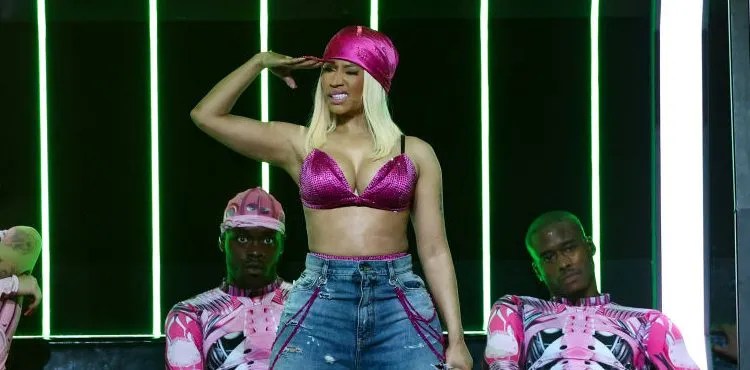
I don’t know why the Dutch police arrested Nicki Minaj a couple weeks ago for having some pre rolls in her crew’s luggage, when performing in grey sweats at a stadium show was clearly the bigger crime. They say the Pink Friday 2 tour is the highest grossing rap tour by a woman, but I’m over here thinking, how this is not a farewell tour? Because show after show it continues to feel like an exposition of Nicki’s demise.
On the Boston stop of the tour back in April, Nicki flirted with feminism when she brought out the rappers featured on “Super Freaky Girl – Queen Mix”: JT, BIA, Akbar V, Katie Got Bandz, and Maliibu Miitch. The Barbz were floored, praising the dusting of female solidarity from queen Nicki.
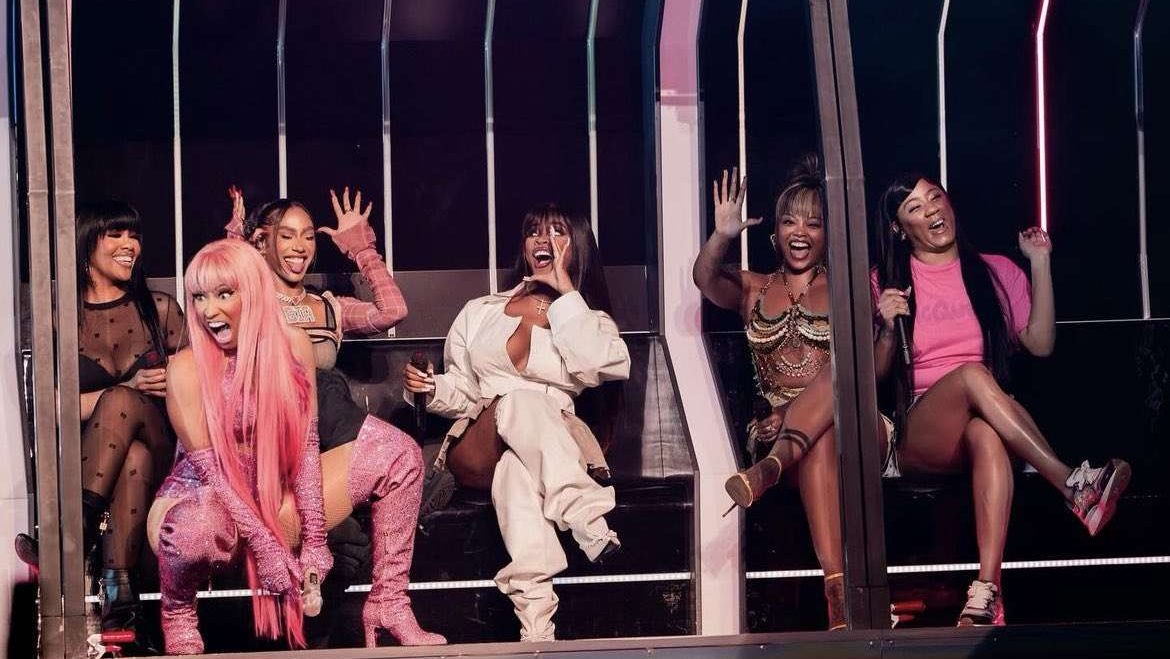
All the while, these hand-picked women pose no actual threat to Nicki’s throne as the reigning queen of rap. God forbid she brings out someone who is actually talked about as much as she is, someone like Cardi B, Doja Cat, or dare, Meg Thee Stallion, and put the “beef” aside to show female solidarity in a male-dominated space that feeds on female friction. But it’s clear that Nicki merely performs feminism to mask her paranoia of being dethroned.
Miss Onika Tanya Maraj has been touted as a guys girl her two decade long career. Well aware of her position as a young black woman in the male-dominated rap regime, Nicki turned to the ones in power to help her rise up; “Young Money raised me,” she reminds us time and time again. Like girl, we know, it shows in everything you do.
Brought up under the mentorship of Lil Wayne, Nicki persevered in the male sea of sameness and pioneered a new kind of female rapper—an animated personality in pink bangs whose verse can cut through a track like a machete through butter. All in a space where, historically, women had one of three roles: (1) a mute accessory, sprawled on a Cadillac in a rhinestone bikini (2) the hypersexualized kitten rapper (like Lil’ Kim) or (3) the masc class clown rapper (like Queen Latifah or Missy Elliot).
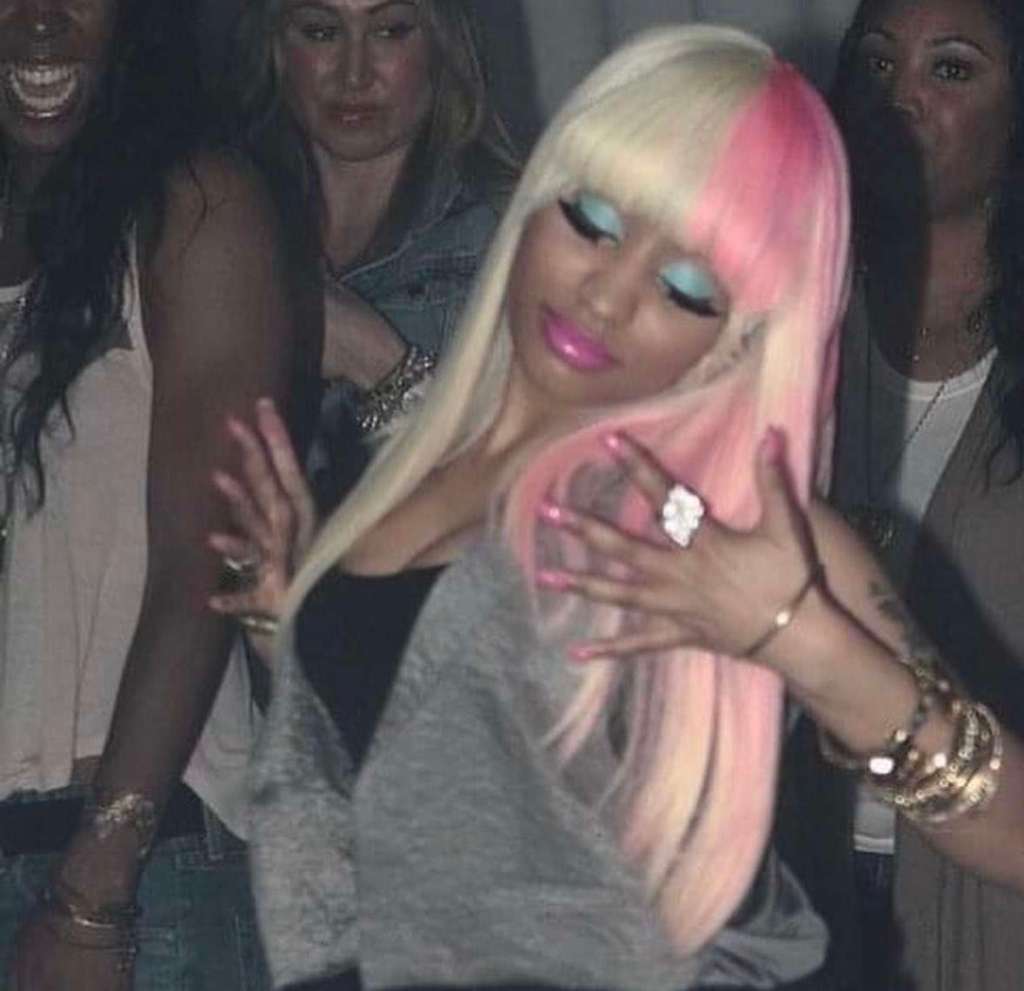
The success of Nicki Minaj created demand for more, birthing the bountiful generation of female rappers we see today from Saweetie to Flo Milli to Sexyy Red, and Lil’ Kim really opened that door for her. But the difference is that Lil’ Kim made female rap a party, while Nicki refuses to leave the arena behind.
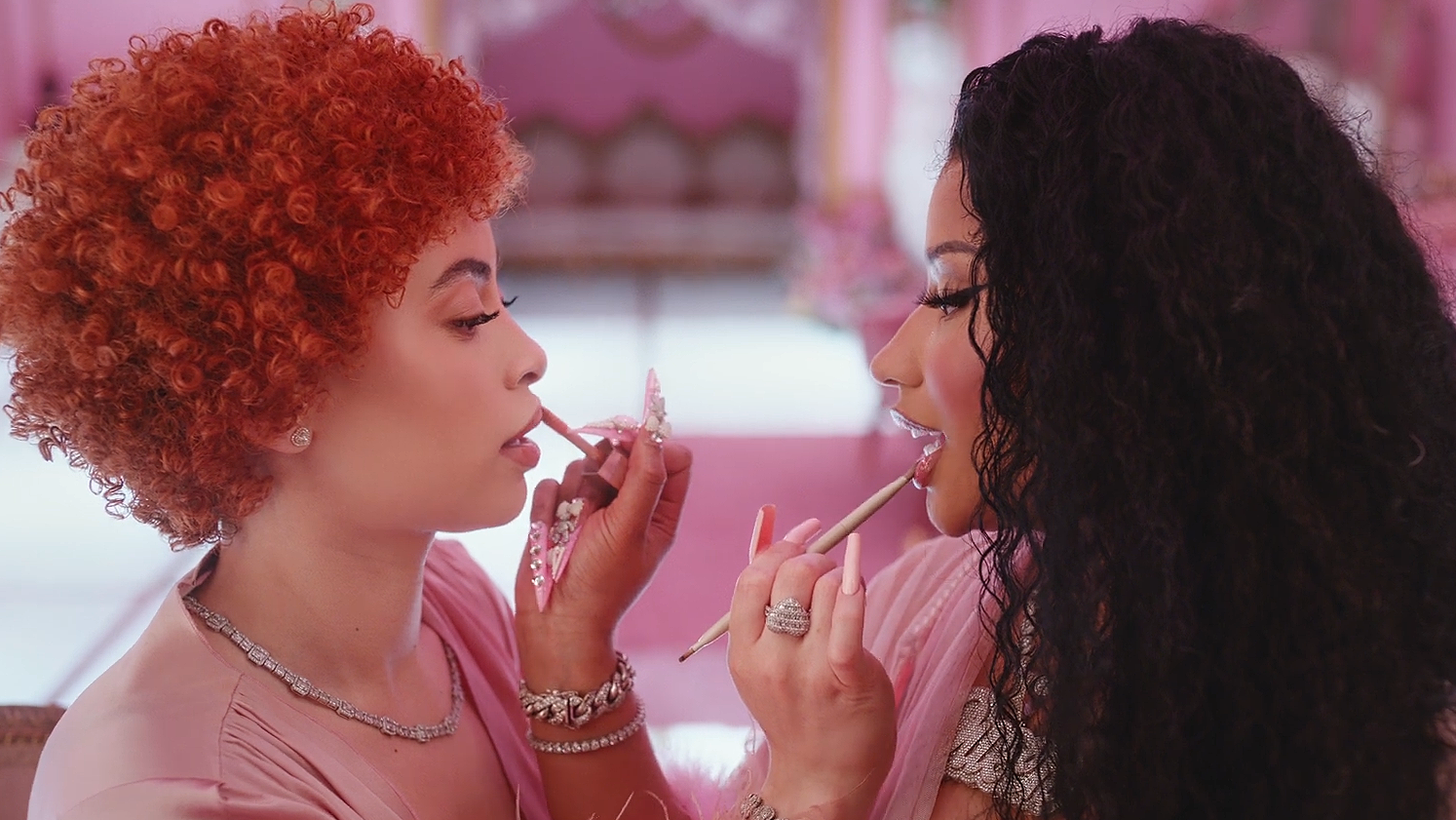
In the grand scheme of her career, she’s worked hard to keep her same-sex collaborations to a minimum, prioritizing women of a different genre like Ariana Grande. The big-name female rappers who she’s collaborated with, like Cardi B and Meg, she has now blacklisted. It’s only a matter of time before something turns sour with Ice Spice.
There’s this heartbreaking interview six days before the release of Pink Friday in 2010 where a young, raw Nicki vents: “You have to be a beast, that’s the only way they respect you… When I’m assertive I’m a bitch, when a man is assertive, he’s a boss.” She ends the interview with, “Don’t use this footage please. It’s just gonna make me look stupid.”
In this playing field of double standards, Minaj is able to brand herself as the eternal victim; her words ring, “When I’m assertive I’m a bitch, when a man is assertive, he’s a boss.”
But in Nicki’s world, it’s not just the patriarchy that’s out to get her, it’s quite literally everybody and their mother. And while there’s often a degree of justification to her defense, she never fails to make it into an episode.
Most recently in Amsterdam, while she was undoubtedly racially profiled by the police, she leveled-up her victimization using her tried and true weapon, the Barbz. She recorded and live-tweeted her interactions as amour, claiming that the police were trying to sabotage the Pink Friday 2 tour because it’s “too successful.”
She also has a long history of getting defensive in the face of criticism. Let us not forget when Queen (2018) debuted at number two on the Billboard charts and she scrambled to blame anything but herself. She justified this reaction on Ellen shortly after, and it’s hard to watch without falling for the Victim Nicki Lore; Ellen belittles her feelings and tries to change the subject to Nicki’s dating history.
But somewhere along the way, Nicki perfected the art of weaponizing her marginalization. When new criticism comes along she uses it to feed her ongoing victim narrative and fuel the Barb ecosystem to keep the delulu machine running. As a certified 💯 victim herself, how could she ever do wrong?
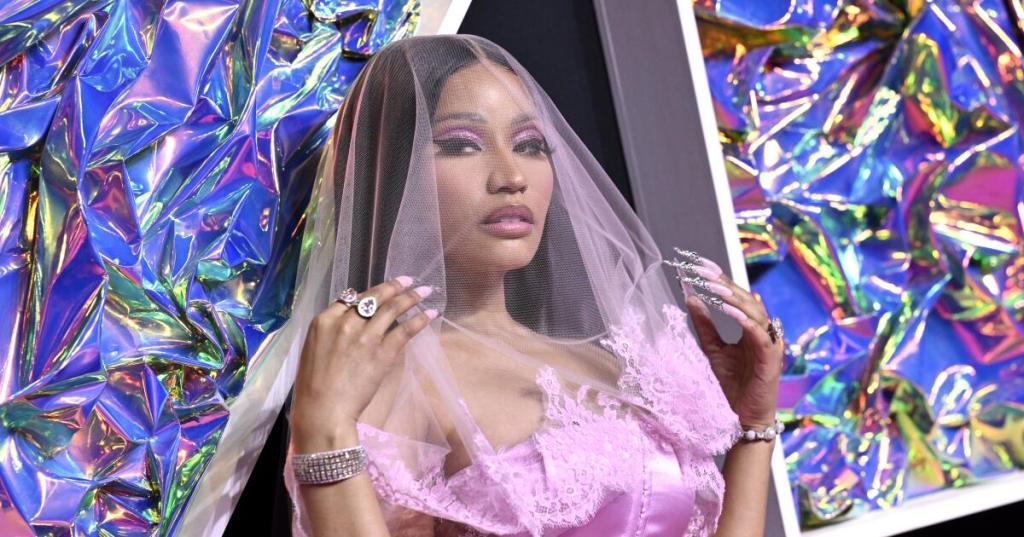
Today, Nicki Minaj is both the oppressed and the oppressor, both the hero and the villain.
Early on in her career, Nicki made a decision to align herself with male abusers instead of victims, applying her ongoing victim narrative to the many abusers she holds close. In 2012, only a couple years after Chris Brown assaulted Rihanna, Nicki chose to collaborate with him on “Right By My Side,” and continues to show him love and support today. And when her brother was charged with sexually assaulting his 11-year-old step daughter on multiple occasions and was caught doing so, Nicki wrote a letter of support to the judge on her brother’s behalf. Not to mention one of Nicki’s creative alter egos, Roman Zolanski, resembles the name of Roman Pulanski, one of the most notorious pedophiles in history.
The defiant Nicki Minaj has insisted on working with 6ix9ine more than once despite him being found guilty of “the use of a child in a sexual performance,” and just generally known as an all-around piece of shit. I could go on and on, but above all else, Nicki loves abusers so much she married one; her husband was convicted of rape when he was in high school, and is a registered sex offender. To support her husband, Nicki harassed the victim to try and get her to recant her story, offering to buy her silence and even make a happy birthday video for the victim’s daughter (!).
In her eyes, this long list of associates are also victims by way of accusation. This delusional defense has consumed Nicki Minaj as we knew her, causing her to spiral into the kind of freak who sits in her mansion liking tweets that mock when Meg thee Stallion was shot.
It has also compromised her artistry. Her debut Pink Friday (2010) represents everything that Nicki Minaj once was—a magnetic, chromatic personality who disrupted the rap homogeneity like a true dungeon dragoness. While its sequel, Pink Friday 2 (2023) and the corresponding tour prove to be everything she has dwindled into—an erratic, hollow, and superficial mess with just enough pockets of the old Nicki to stay afloat.
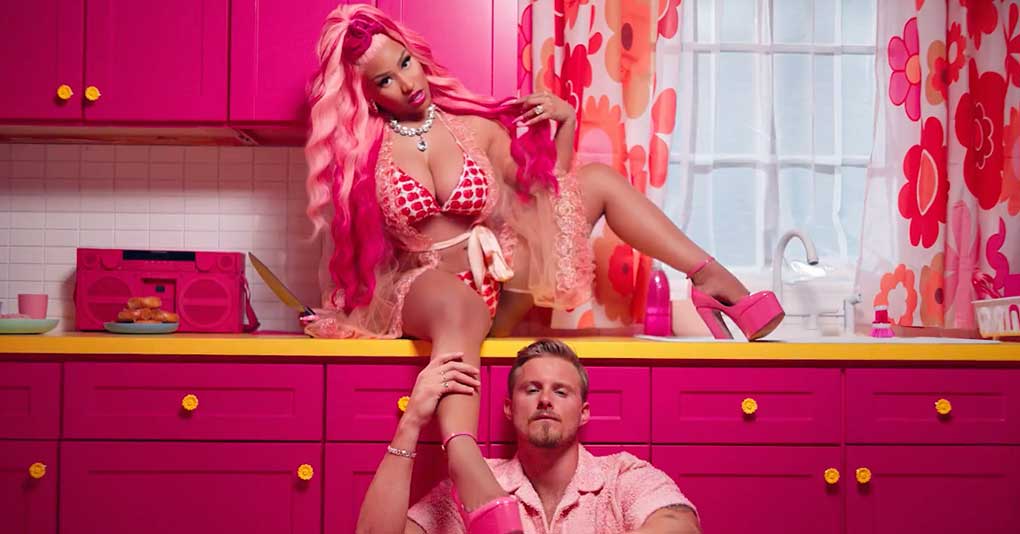
Historically, Nicki has found her paycheck in remixing, speeding up, and rapping over a well known song, dating all the way back to “Check It Out” in 2010. But 2022’s “Super Freaky Girl” marked a new era in this method; it debuted at number one on the Billboard chart, the first time a female rapper has done that solo since Lauryn Hill’s “Doo Wop (That Thing)” in 1998. Far from sampling, Nicki’s formula is more like a Chiddy Bang revival—uncomplex, familiar, and profitable.
Pink Friday 2 is muddled down with this superficial formula. (I mean, the full first minute of the album is literally just a Billie Eilish song.) There is no applaudable fusion between the base (sampled) tracks and any original production across half of the album—“Everybody,” “Red Ruby Da Sleeze,” “Pink Friday Girls,” and “Are You Gone Already.” Similar to the AI album art that I mistook for a high school graphic design mid-term, it’s candy to the TikTok brain—digestible and catchy content that sacrifices originality for rudimentary recognition.
So what’s next for Miss Minaj? “Cowgirl” is the lone fighter of Pink Friday 2 in my eyes, a prevailing bop in a project where artificiality drowns out any actual creativity. But none of it really matters as long as her rabid Barbz stay loyal. Because these days, it seems as though Minaj is more interested in pouring her talent into cyberbullying than anything else.
Pink Friday 2 does nothing to extend Nicki’s music into the modern discourse, but rather, further cements her in the past. And in a future that promises more than just one female rapper, maybe the past is where she’d rather be, anyway.
 The Peeling