
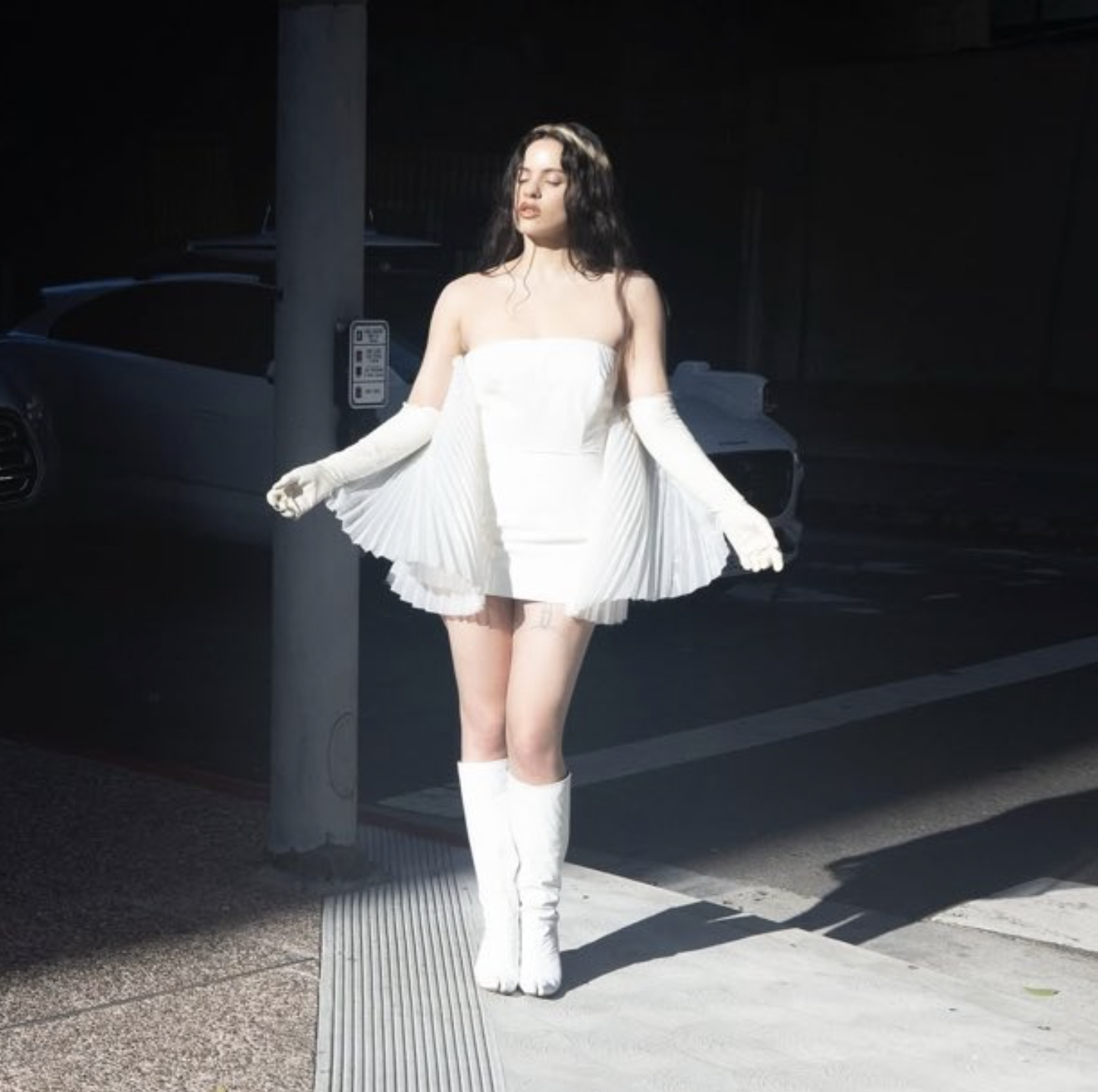
“Ego sum nihil. Ego sum lux mundi,” Rosalía contends through gritted teeth on “Porcelana,” from her latest release.
I am nothing. I am the light of the world.
Like God, who’s intangible yet the creator of heaven and earth, Rosalía unleashes the divine feminine by positioning women as the same. We are nothing, the inferior gender, and yet, the arbiter of the light, the ones who birth life itself. For women, the truth lies in the latter, as Rosalía tells us with the name of her fourth studio album, LUX.
Ego sum lux mundi.
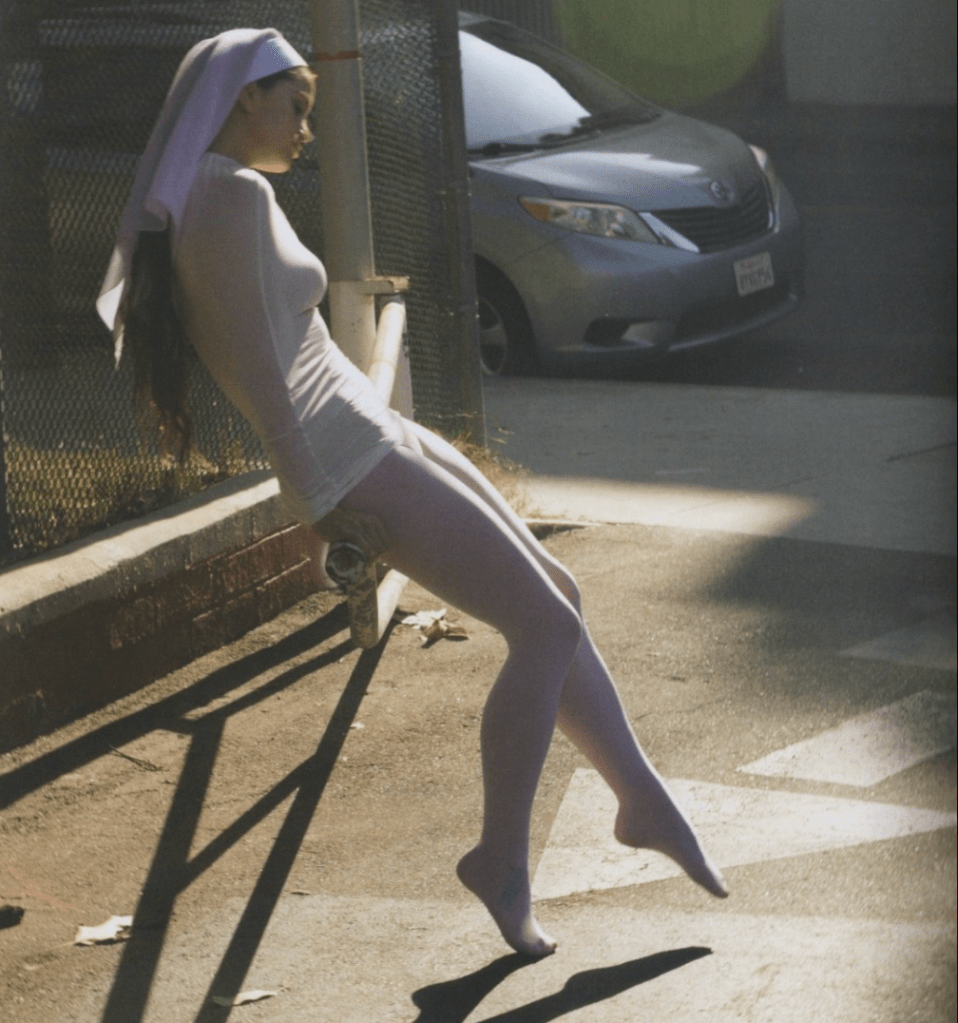
The years of undigested eucharist in my stomach started churning again last year when I first hit play on this supreme record, and was met with a question. “¿Quién pudiera vivir entre los dos?” Who could live between the two? Between one world of “sex, violence, and tires,” and the other world of “flashes, doves, and saints.”
Rosalía’s 15-track exploration of the contradictions within those two worlds is a towering work of art so rich in grace, honesty, and humanity, that for the first time since I was a child, I’m sidelining atheism. Her celestial hymns pour like liquid gold into 13 different languages, telling a story that ascends above the arbitrary boundaries of our world, in search of the unified understanding.
Rosalía spent the last few years in abstinent solitude in both Miami and Los Angeles, rigorously studying phonetics, theology, and the lives of saints. It wasn’t just the relatable tribulations that inspired Rosalía to tell the stories of these saints, but also the range in canonization qualifications. “In different religions, contexts, (and) cultures, sainthood is understood so differently,” Rosalía told The Guardian.
Just as she does not subscribe to a singular definition of sainthood, nor does she subscribe to one religious denomination. “For me, there are ideas in different religions that I resonate with. I resonate with Buddhism, Islam, Christianity, and Hinduism. I think they all have things I connect with.”
This fluid philosophy is the heartbeat of LUX; faith is the unifying factor across all spiritual beliefs, and global stories of the feminine mystique are a tool for mass connection. Worlds and denominations are melded together, mirroring the album’s fusion of classical and pop music, like in “Porcelana,” where an ancient drumline meets flamenco palmas and builds into a classical ascent with a violin backing angelic hymns.
When talking about the record, Rosalía’s words weave through each other with grace, oscillating between English, Spanish, and Catalan, mirroring the seamless multi-langual fusion of LUX’s storytelling. (I’d like to think the inspiration came from her friend Arca who uses a similar technique to break through both language and gender barriers.) Words are crafted together so perfectly throughout the album that you can hardly even tell when Rosalía shifts languages, because LUX speaks in one language— the human language.
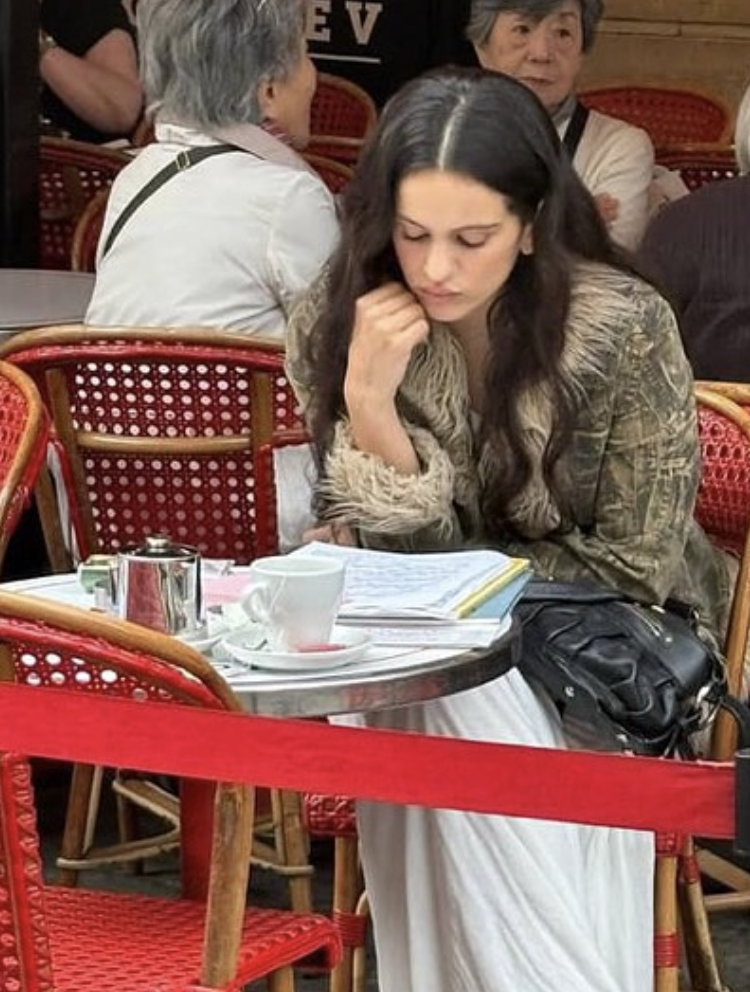
Rosalía’s appetite for discovery sparked this quest for a unified understanding; “I started as a student. I am still a student.” However, it is her robust intuition that has allowed her to execute her learnings seamlessly—prancing atop her stage in new pointe shoes, using specific artistic references to bring LUX to life, and effectively communicating in new languages.
I spent the larger part of last year enraptured by Women Who Run With the Wolves by Clarissa Pinkola Estés, an anthology of ancient stories of the female psyche which may or may not have been the inspiration behind my decision to quit my job and embark on a soul replenishing pilgrimage this summer.
Through the old Russian tale of Vasilisa, Clarissa Pinkola Estés affirms that intuition is “the treasure of a woman’s psyche. It is like a divining instrument… a crystal through which one can see with uncanny interior vision… A healthy intuition can change a woman’s attitude from ‘what will be, will be,’ to ‘let me see all there is to see.’” And how does a woman strengthen her intuition? By listening to it.
Rosalía’s intuition led the process of learning new tongues to communicate with, including Arabic, Latin, Sicilian, Ukrainian, and Japanese. She started by writing and trying to teach herself through Google translate, first seeing how far her own hand would take her. Only then would she gut check it with a native speaker and correct her mistakes.
For Rosalía, speaking someone else’s language is an act of empathy; “Once we understand each other better we can understand ourselves better, and learn how to love better.” She’s careful to clarify that her engagement in others cultures is out of pure appreciation, not appropriation. When asked about this on Popcast, Rosalía mentioned a quote from the philosopher Simone Weil: “To love purely is to consent to distance. It is to adore the distance between ourselves and that which we love.”
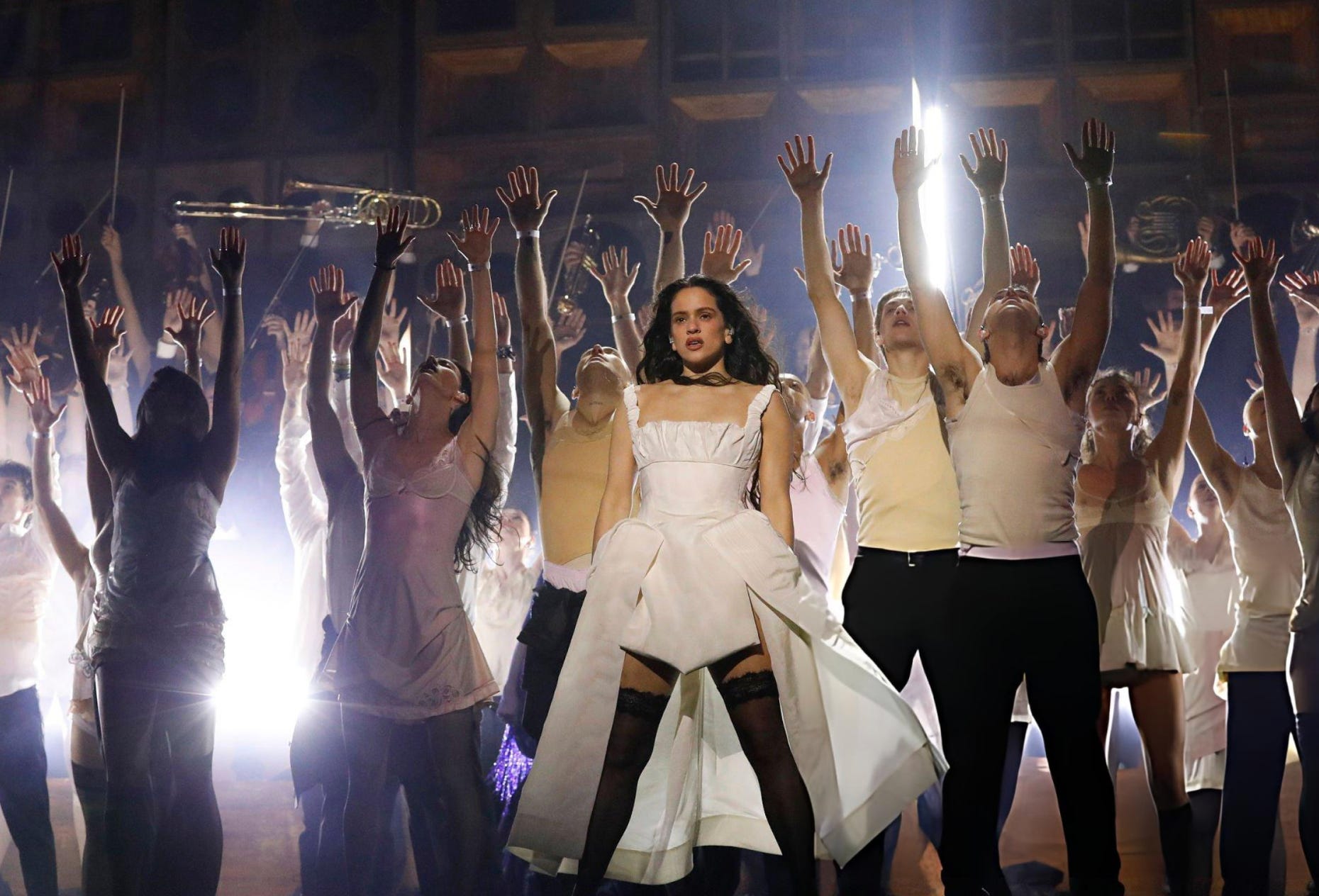
Where heaven and earth meet on LUX, humanity is a sanctity—“Each vertebra reveals a mystery / Pray on my spine, it’s a rosary”—and is celebrated as such. The hands of the London Symphony Orchestra mold the cathartic classical production, and the vocal chords that bend to their limits statue as a point of defiance in a moment when we are fed the notion that technology is better, faster, and stronger than us.
And the monumental lead single, “Berghain,” is exactly that—defiantly human. An operatic ballad with such force born from the fingertips of the ensemble and the voice of Rosalía. A weapon to unleash upon those who get the most feeling from a scrolling induced dopamine rush. A palette cleanser to reimagine what is worthy of our attention.
Innovation takes a human shape on LUX, where Rosalía is more interested in the progression of the self and how that manifests in art. When asked why she didn’t ride the success of 2022’s MOTOMAMI and create something similar for her next project, she said, “there always has to be a change to reflect who I am and how I’ve changed.” Rosalía holds a divine relationship with the notion of what next?, and tells us about it with, “La Yugular,” the song that lifts the floor out from under me.
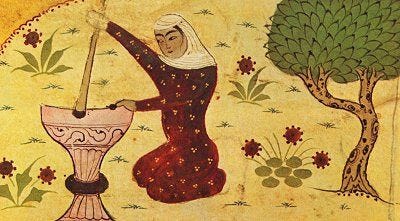
Inspired by an Iraqi saint named Rabia Al Adawiyya, “La Yugular,” is a gut wrenching plea for divine intimacy, and divine reach. Rabia is regarded as the first female Sufi saint of Islam, and is known for founding the doctrine of divine love. She practiced Islam out of her “pure, selfless love of God,” seeking the love of God for his own sake, rather than out of desire, reward, or fear of Hell.
“Mira yo no tengo tiempo / Para odiar a Lucifer,” Look I don’t have time / To hate Lucifer Rosalía sings on “La Yugular.” “Estoy demasiado ocupada / Amándote a ti Undibel” I’m too busy / Loving you, Undibel (God). It remains to be seen who the devil in question is.
The Qur’an states that God is closer to a person than their own jugular vein—the vein that drains blood from the brain, face, and neck back to the heart. Rosalía uses this to consider the contradiction in God’s presence: “Tú que estás lejos / y a la vez más cerca / que mi propia vena yugular” You who are far away / and yet closer than ever / to my own jugular vein.
She then builds on this doubt-fueling juxtaposition in the song’s striking finale—A thorn can’t fit in Him, but He fits in my chest. “Doubt is what keeps faith alive,” Rosalía has said. And doubt is what charges this search onward.
The conclusion opens like a hushed prayer and swells into a battle cry with Rosalía belting the contradictions into the ether until doubt breaks the barrier, unveiling an explosion of light and glory, as she enters the great beyond. Only to then ask what next?
Patti Smith’s spoken words close us out: “Seventh heaven? Big deal. I want to see the eighth heaven… Break on through the other side it’s just like going through one door. One door isn’t enough. A million doors aren’t enough.”
Oh, you saw heaven? How great. Now, what’s next? How do you go beyond the great beyond?
Projecting yourself toward something greater than you is one of Rosalía’s guiding principles, and the only true testament of divine intervention. To dismiss preconceived notions of success, stop seeking the next door, or the other side, but instead seek the inconceivable place, the one that comes after all is lost.
Ego sum lux mundi.

