
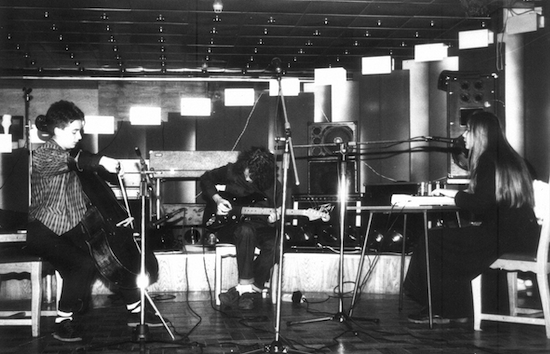
I nearly felt the marrow of my bones tremble the first time that I heard “The Great Hen-Yuan River” by Sugar White Death (Ukrainian: Цукор біла смерть – Cukor Bila Smert). My eyes glazed over, and I wondered where I was, where I’d been, and where I might be going. And were they coming with me?
What a surreal introduction to the sonic landscape of the Ukrainian underground. The haunting vocals of Svitlana Nianio, frontwoman of Sugar White Death, wrapped me up and pulled me through the orbit of resistance.
Earlier this year I watched our president and vice president bully the president of Ukraine about what he was wearing on live television while Russia progressed its illegal invasion of their nation. I saw Ukrainian erasure take a more subtle form, and that same Sugar White Death cry rang in my ears. Though I had no clue what Nianio was actually saying, the longing for everlasting relief came through loud and clear.
The Eastern European country not quite the size of Texas has maintained democratic institutions more than any other ex-Soviet nation, placing it in a very unique geo-political position. Culturally aligned with Europe but geographically among Russified Eurasia, Ukraine is largely seen as the window to the West; a threat to Ukraine is a threat to the East-West balance, and thus, a threat to global order.
The Ukrainian people have endured a rolodex of occupants from the Poles, Hungarians, Germans, and most aggressively, the Russians. Occupiers have forced cultural suppression upon the Ukrainians since the early days of the Russian monarchical rule in the 1700s, and centuries of ethnic cleansing have ensued—the Ukrainian language was not to be used, and Ukrainian history banned from school curriculums.
In 1932, under Soviet rule, Ukrainian erasure took the form of genocide. Joseph Stalin’s totalitarian regime orchestrated a man-made famine, the Holodomor, killing an estimated 5-8 million people, 4-5 million of them being Ukrainian, on par with the Holocaust.
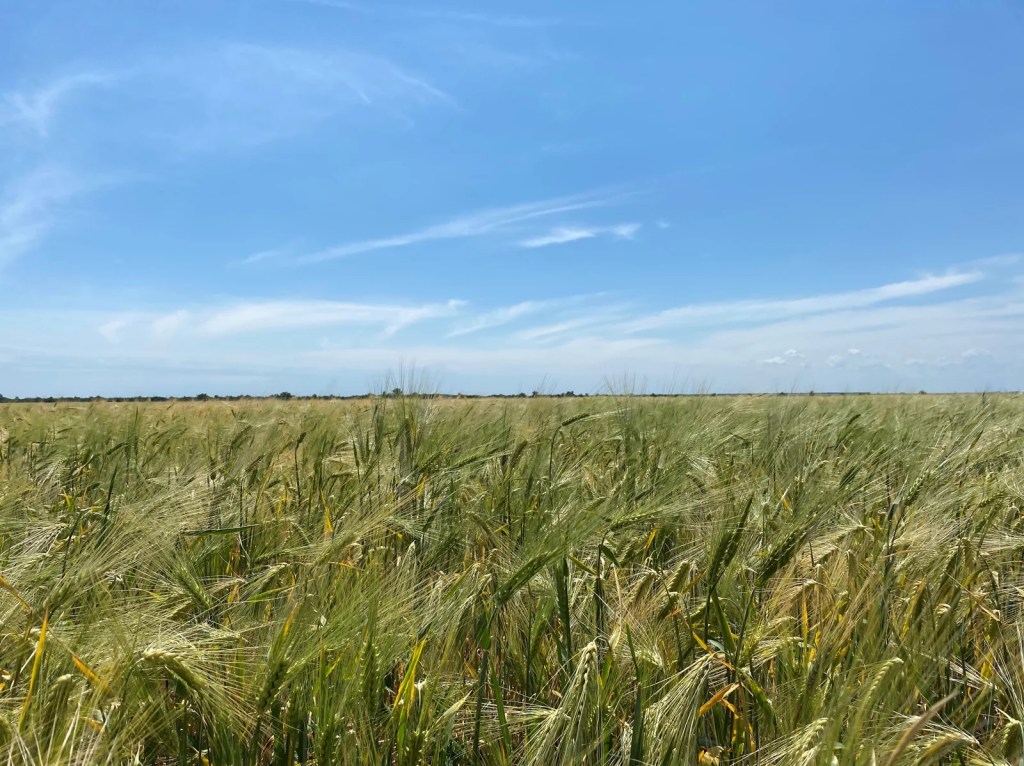
Ukrainian musical expression implied the existence of an independent culture within the Soviet Union, and thus, the USSR strictly limited music releases to homogenous, government controlled ensembles—VIAs. Up until the collapse of the Soviet Union in 1991, the propaganda bands were all you would hear on the radio, singing their vanilla tunes of love, family, and adoration for fellow comrades.
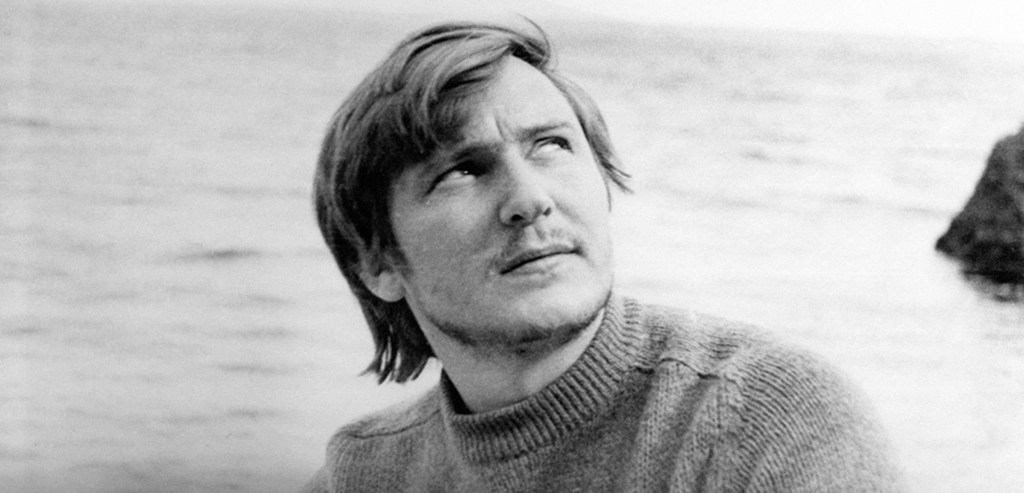
However, in 1968 legendary Ukrainian composer, Volodymyr Ivasiuk, wrote a little song called “Chervona Ruta.” Made popular by singer Sofia Rotaru, “Chervona Ruta” was an instant hit, and Ivansiuk’s fame blossomed into icon status, raising the eyebrows of Soviet officials.
The popularity of Ivasiuk offered agency to the Ukrainian people amidst the hundreds of years of forced assimilation, and “Chervona Ruta” stood tall as that beacon of independence. But Ivasiuk became an enemy of the state when he refused to weave Soviet propaganda into his work, and in 1979 he was murdered by the KGB, disguised as a suicide. The martyr’s music was pulled from radio broadcasts and wiped from record store shelves upon his death.
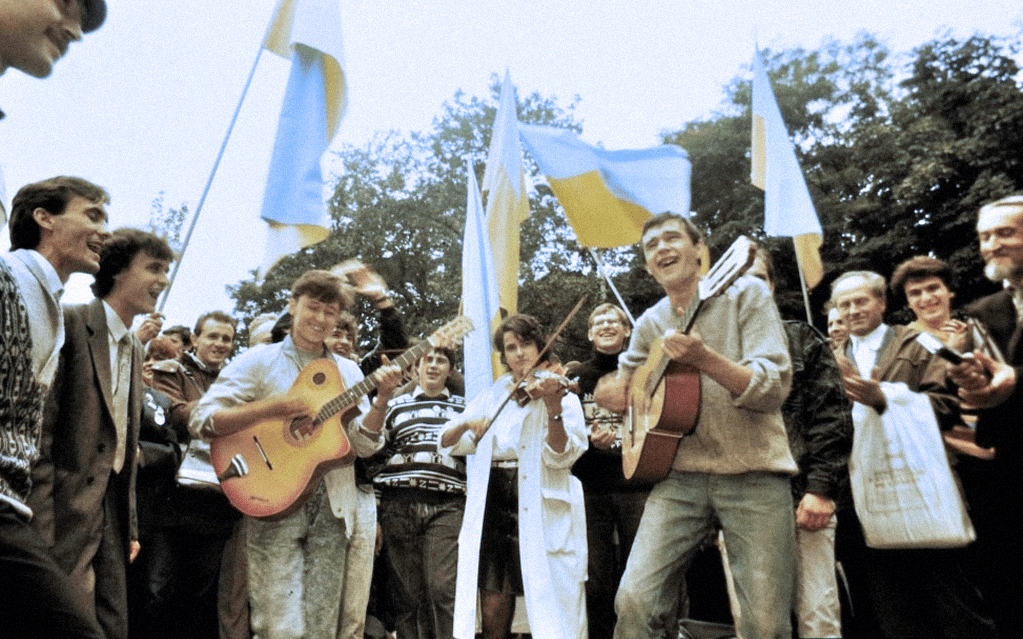
By the late 1980s, the cracks in the system paved the way for what had been brewing beneath the surface for centuries. New Ukrainian leaders emerged who pushed for the use of the Ukrainian language and education of Ukrainian history. Mass graves from the Holodomor were unearthed, and the genocide entered into the public discourse for the first time. Newfound activism took shape for safe working conditions in the mines, and the coverup of the 1986 Chernobyl disaster began to unravel.
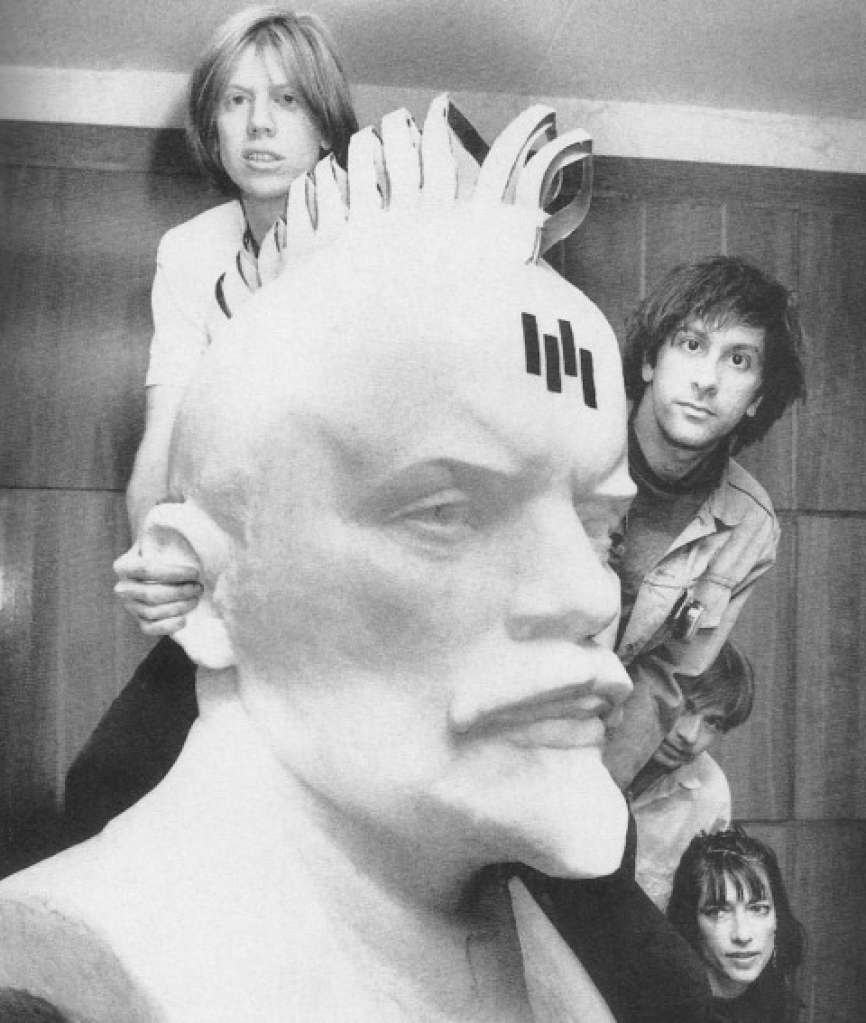
At the same time, American underground legends, Sonic Youth, played in Kyiv in 1989, the year of the Ukrainian spring. American-Ukrainian punk musician Eugene Hutz was there, and cited the gig as a turning point in his life; “That SY Kyiv show was life-changing for all musicians that were there,” Hutz said. “These were the new vitamins we needed.”
By the late 1980s, pockets of independent music were sprouting across the country, jump starting the independent Ukraine. The exquisite, avant-garde Sugar White Death formed in 1988, inciting a near medieval sound affixed with lavish, spectral melodies. To an American girl living in 2025, it’s as if Black Country, New Road and Kate Bush spiraled out together for a little bit. From what I can tell, these guys are the celebrities of Ukrainian underground, and their collection of tapes, Манірна Музика (Mannered Music), is among many staples released by Koka Records.
Koka Records was founded in Warsaw in 1989 by Ukrainian musician, Volodymyr Nakonechny, and is largely credited with publishing the Ukrainian underground sound and delivering universal accessibility to this multi-layered soundscape.
The diverse microbiome of subgenres and sounds flourished in a newfound, independent Ukraine upon the collapse of the Soviet Union in 1991. While Sugar White Death led with porcelain-grade avant-garde, bands like Yarn explored a Slavic-folk sound, and Ivanov Down leaned more into an industrial, post-punk noise-scape.
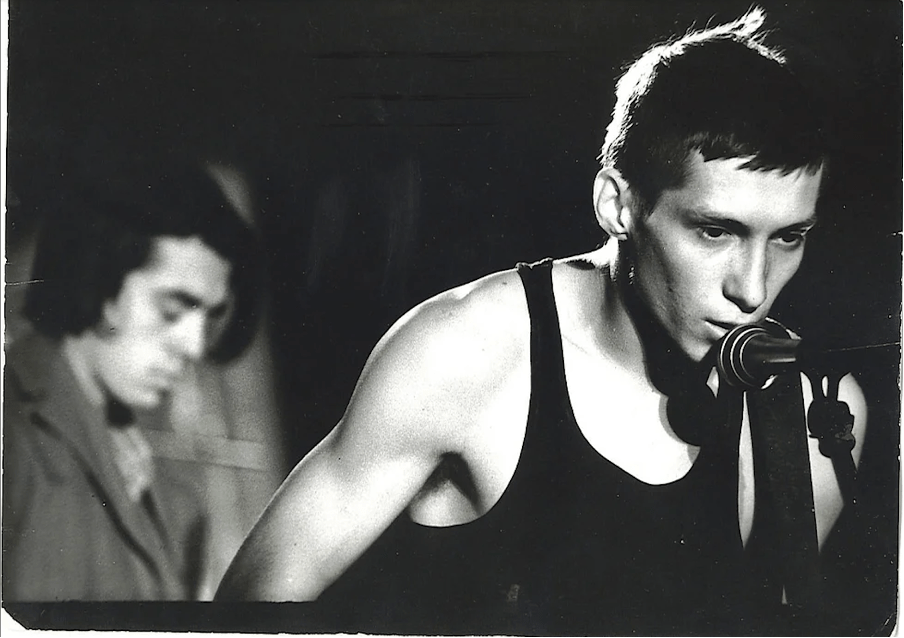
Aside from Koka’s releases, I found it quite difficult to uncover the sounds of the underground, Soviet-era Ukraine. It was a little too on the nose when I stumbled upon a bit of Svitlana Nianio (lead singer of Sugar White Death) on a Polish-released collection titled Music the World Does Not See.
But at last, Shukai Records led me right where I needed to be. A subsidiary of Muscut Records, the archival label focuses on “bringing back to life the lost tapes from the Ukrainian 60–90s — music for films, television and outsider artists.” Just last year, Shukai collaborated with American label Light in the Attic on the truly magnificent collection Even the Forest Hums: Ukrainian Sonic Archives 1971-1996, made available in physical release and on major streaming platforms.
It is the resilience of the Ukrainian sound that is most remarkable to me; influence from Western and neighboring Eastern European genres is interpreted, but the autonomous Ukrainian perspective perseveres across genres. Throughout Even the Forest Hums, I taste layers of disco, psychedelic, baroque-rock, and even ambient-electronic; “Oh, how, how?” by Kyrylo Stetsenko and Natalia Gura opens with a celestial offering and builds into a groovy, funk chartered banger, while “Dance” by Vadym Khrapachov spins from supernatural electro-disco into a roots-y jangling acoustic.
Upon Russia’s illegal invasion of Ukraine in 2022, the founder of Muscut and Shukai records, Dmytro Nikolaienko, donated the entirety of label proceeds to Ukrainian war relief. More recently, they’ve imposed “label-level sanctions” against the US due to the American government’s continued alignment with Russian decisions and overall softening on the Kremlin. (Under the Trump administration, just 40% of American Republicans now say Russia is an enemy, down from 58% last year under the Biden administration.) Label-level sanctions include removing US-based payment services (PayPal, Stripe, Bandcamp) from the Muscut and Shukai platforms. They’re in the process of transitioning to Ukrainian-based services where customers will pay Ukrainian taxes and transaction fees instead of American.
A portion of earnings from Even the Forest Hums are also given to war relief efforts, and Sonic Youth released the live recording from that 1989 show in Kyiv to donate the proceeds. The robust soundtrack of underground Ukraine is not only the cultural stronghold against centuries of occupation, but it is also directly funding the front line of defense. In the yearning of “The Great Hen-Yuan River,” the very melody that led me down this journey, I am reminded that peace is a privilege, and through music, Ukrainian liberation is everlasting.
Even the Forest Hums: Ukrainian Sonic Archives 1971-1996 is available for purchase via Light in the Attic Records.
Recordings 1990—1993 by Cukor Bila Smert’ is available for purchase via Muscat Records.
You can donate directly to the Prytula Foundation.
You can also check that you’re registered to vote ahead of the 2026 midterms.
And you can vote fucking blue.
SOURCES I AM THANKFUL FOR
“From The Archives Podcast: 9. Ukrainian Underground Tapes” by Ivan Shelekhov
“Futurism Restated 113: Muscut’s Nikolaienko on Ukrainian Resistance and Boycotting Trump’s America” by Philip Sherburne
“Holodomor History” – Holodomor Museum
“New Voices Ukraine” – The Quietus Radio
“Republican Opinion Shifts on Russia-Ukraine War” by Moira Fagan, Jacob Poushter and Sneha Gubbala
“Sonic Youth Unearth 1989 Kyiv Concert to Raise Money for Ukraine Aid” by Daniel Kreps
“Sonic Youth Release 1989 Live Album Recorded in Ukraine to Aid Disaster Relief” by Jem Aswad
“The story of Chervona Ruta – Ukraine’s pop song of resistance” by Malcolm Jack
“Ukraine’s farmers face Russia’s blockade and explosives on their lands this harvest” by Peter Granitz
“Ukrainian Indie Music: A Short Primer” by Anton Shmarhovych
“Volodymyr Ivasyuk’s 75th birth anniversary. Remembering the voice of Ukrainian identity” – Ukrainian World Congress

