
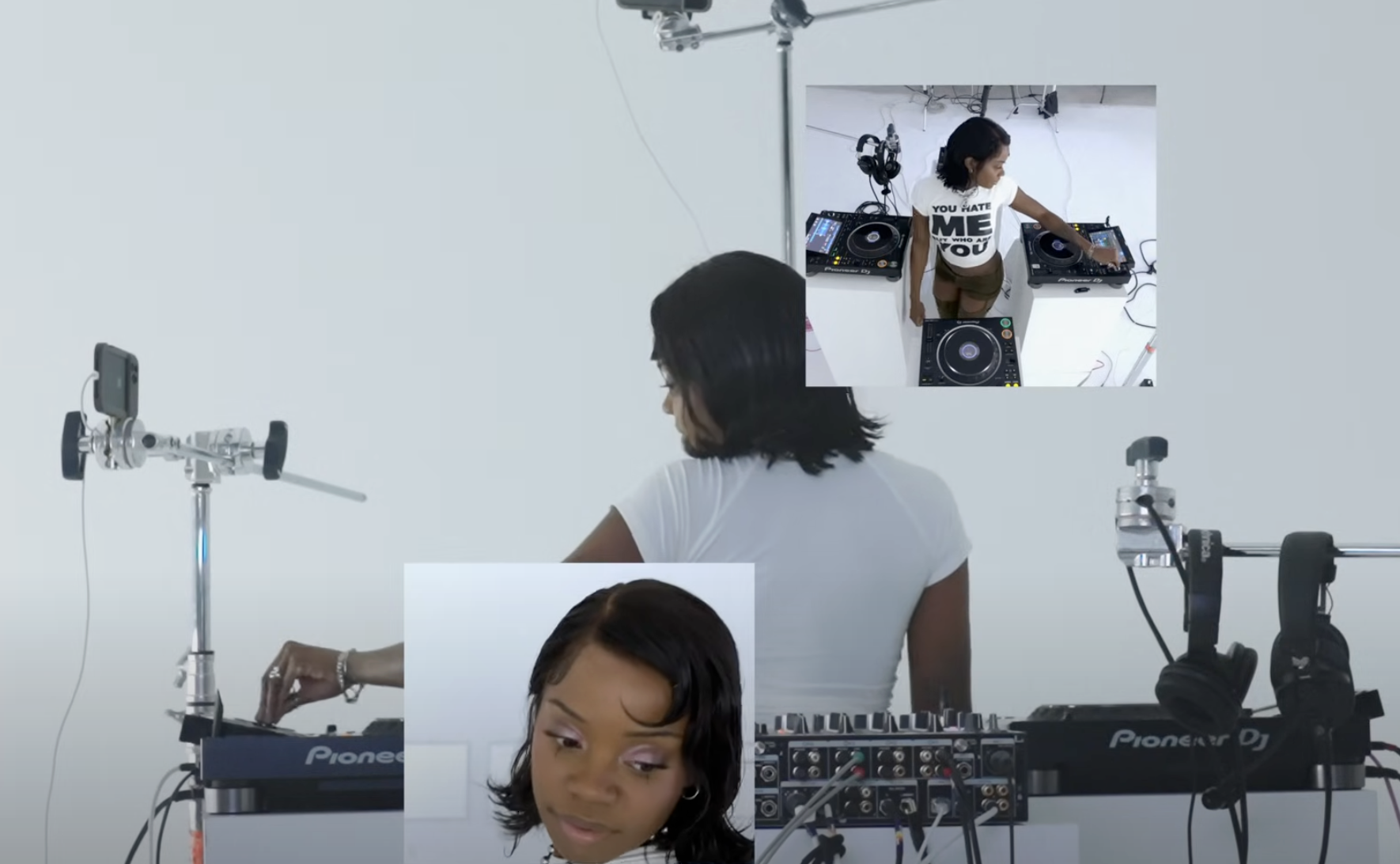
A few weeks ago I saw BAMBII in LA. She came on around 1am in an unfinished warehouse in a desolate corner of DTLA. It was my first time seeing her live and I was smitten with how much of a movement director she truly is. With the touch of a button the whole room fell in line. I’m rarely a believer, but I felt a divine presence in the air that night.
I remember a few years ago the streets were saying that Fred again and The Blessed Madonna were dicks to BAMBII at a Coachella afterparty. They played into her set time and ignored her when she asked them about it in the booth. A terrible look for two white people to treat a black dj like that in a genre whose history has been repeatedly white washed in the mainstream.
I don’t know how much respect someone like Fred again has for the black, hispanic, and queer roots of a large sector of American electronic music. My experience at his show back in 2022 would suggest minimal, for if he had enough you’d think it would trickle down to his fan base. But instead I found myself in the armpit of a Beta Delta Phi Gamma Kappa Beta fist bump for two hours.
The music of Fred again, along with his boyish grin, is easy for us; it’s joyous, often not too complex, and at the root, brings people together. In 2021 he bridged so many feelings of lost connection (mine included) with his breakout album, Actual Life. Using recordings of real interactions with friends, associates, and strangers and folding it into a velvety dance track brought a sort of melancholic euphoria in a time of isolation.
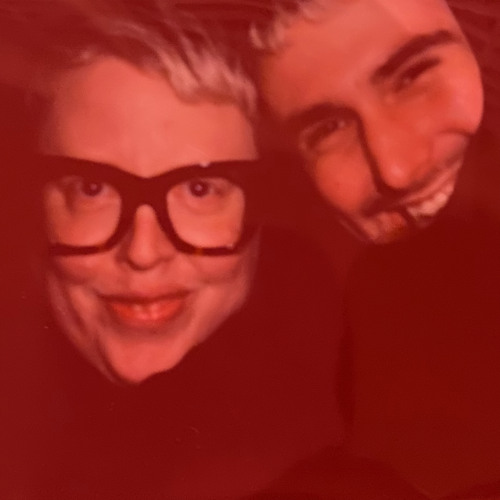
Much of Fred’s discography and dj sets span across ambient, jungle, pop, techno, and uk garage. But it’s clear that house music is the blueprint for much of his work, down to the background chorus vocals of “adore u” resembling a ballroom dj. With this, Fred brings a new flavor to mainstream electronic that had previously plateaued across EDM uncs like Martin Garrix, Kygo, and Diplo. He’s perhaps the first musician to popularize house music since Daft Punk.
Let us not forget that house is the child of mother disco, and disco is an emblem of queer, hispanic, and black culture. With evolution comes dilution, sure, but it has never sat right that the bigots who held an event to “demolish disco” now likely send their kids off on their merry way to the Fred again set at Lollapalooza.
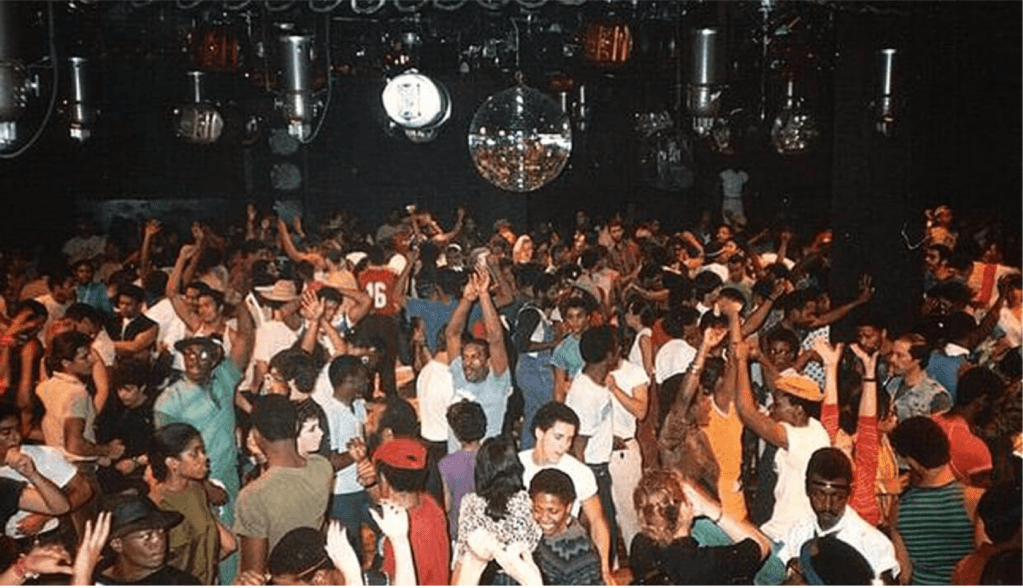

In the US, electronic music only rose up from the underground in the late 90s once execs caught on to the profitability of catching a mother fuckin’ beat. But the path from Frankie Knuckles brewing history at Chicago’s Warehouse, to EDC glitter-doused PLUR disciples, to today’s average Joe at the Diplo barricade is nonlinear.
In the 90s, electronic music was reproducing in various different directions, searching for a host that would hold. In addition to the foundation of Detroit techno and Chicago house from the motherland, American musicians caught influence from new emerging subgenres like UK garage, big beat, and of course, the Eurodance phenomenon. La Bouche’s “Be My Lover,” Corona’s “Rhythm of the Night,” and Alice Deejay’s “Better Off Alone,” are but a few of the everlasting club anthems that will make the walls pulse long after human extinction. And let me tell you, the Europeans give the respect to this era that it deserves; when I was in Cork, Ireland in 2018, these tracks were in the regular rotation at every club, and brought a fervor to the room unlike anything I’d seen in the US.
With major influence from Madonna’s ‘98 dance masterpiece, Ray of Light, the term “electronic dance music” was more widely used by the turn of the century. EDM had legs in the American youth and that molly-popping, pacifier-sucking rave culture was destined to blossom. What started in the corners of the desert developed into profit-driven, multiple day festivals, with EDC first expanding into a two-day festival in 2008.
In the 2010s we saw different forms of EDM seeping into the mainstream, making up much of the soundtrack of my underage drinking. Skrillex gave the kids dubstep, dance-pop captains like Zedd, Calvin Harris, and Avicii filled arenas of teens and twenty-somethings, and today, musicians like Kygo, Rüfüs Du Sol, and Diplo still reel in pools of festival attendees. The EDM craze of the 2010s became associated with youth culture and rebranded party music as we know it once everyone caught onto the power of a pulsing beat.
And today, the electronic music industry is valued at $12.9 billion globally.
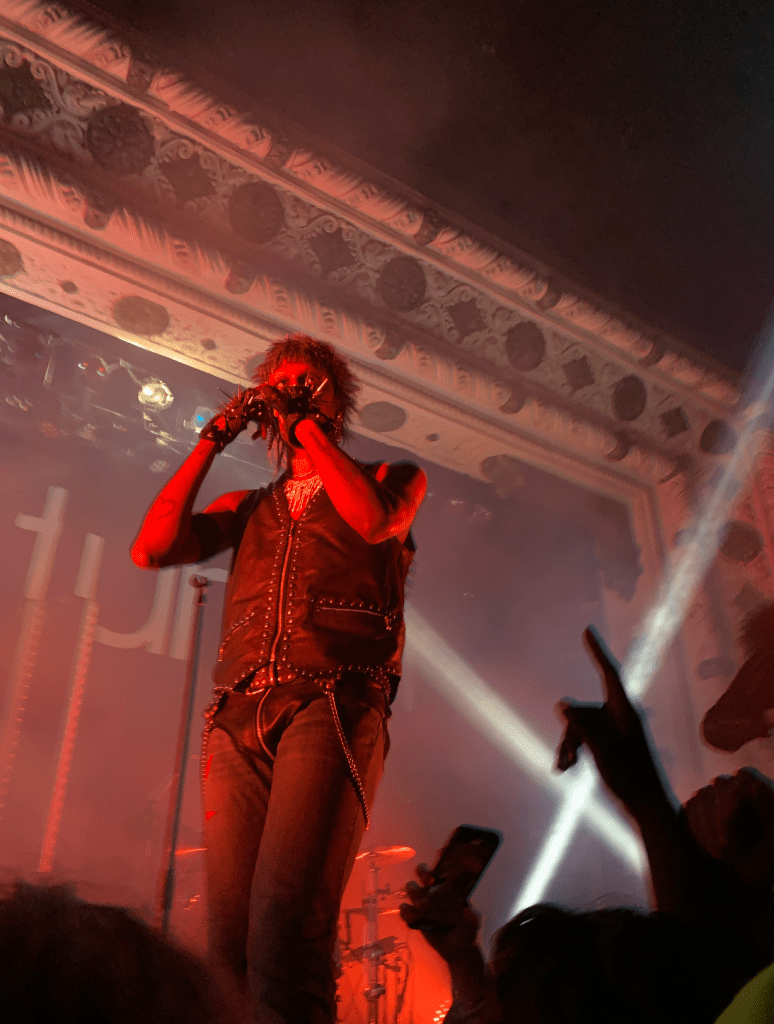
A couple weeks ago Yves Tumor tested some of these folks on how far they’d go beyond their mainstream nest when opening for Swedish House Mafia. If not enjoy, could they at least appreciate a different branch of the electronic soundscape? Yves took it foolishly far and gave these shallow-end listeners an experimental noise show, screeching and scratching to a strobe light, setting an exquisite vibe for the evening.
And so Yves got boo’d off stage and then crashed out on main, calling Swedish House Mafia fans “the corniest people alive.” I couldn’t help but laugh at the sheer comedy of it all, and then my cackle turned condescending. Ha ha, of course these people can’t see past the surface level. Ha ha, I’m so much better than them because I can!
While both of those statements may ring true, it remains upsetting to watch the popularized branch of electronic become so pumped full of cash that it now exists far out of touch from the foundation of respect. The history of electronic music in the US is rooted in bringing people together and giving a home to those who had never felt welcomed. It’s true that what was once the soundtrack of marginalization is now the breadwinner at multi-million dollar music festivals, but in an age where every little thing is divisive and we spend most of our time on the edge of our seats, I mourn the day where recognition and respect were common law in all music communities. I mourn the day where a piece of art is seen as its holistic self, not just for the chorus or viral portion. And I mourn the day where attention is patient and selfless.

